
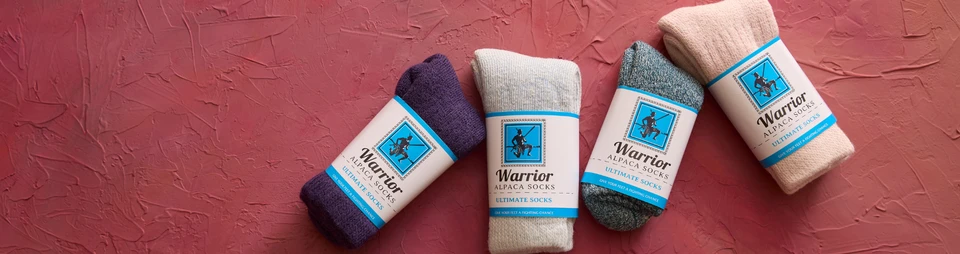
Warm Socks
The Warmest Thermal Socks for Extreme Cold
When cold weather hits, you need socks that actually keep your feet warm. Our alpaca warm socks are made from premium alpaca fiber — a natural thermal insulator that’s warmer than merino wool and softer than cashmere. Whether you’re hiking in extreme cold, working outdoors, or just battling cold floors at home, these are the warmest socks you’ll ever own. Available in styles for both men and women, every pair is breathable, moisture-wicking, and hypoallergenic.
Warmth Science
Why Alpaca Is the Warmest Sock You Can Wear
Warmth in a sock comes down to fiber, not thickness. A bulky cotton or synthetic sock feels warm for an hour, then traps sweat and goes cold and clammy. Alpaca stays warm because of how the fiber is built.
Warmth without the bulk. Alpaca fiber is hollow at its core. Those air pockets trap body heat far more efficiently than the solid fibers in sheep's wool or the brushed acrylic in thermal socks, so you get serious warmth at roughly half the thickness. That matters when the sock has to fit inside a boot without creating pressure and cold spots.
Warm, not sweaty. Thick synthetic thermals like Heat Holders warm fast, then overheat and hold moisture against your skin. Alpaca is naturally thermoregulating: it insulates in the cold and vents as you heat up, and it wicks sweat outward instead of trapping it. Warm and dry beats hot and damp every time.
Warm even when wet. Cotton goes cold the moment it gets damp. Alpaca keeps insulating and dries fast, which is why it holds up on winter trails, cold job sites, and long days outdoors.
Warm without the itch. Sheep's wool contains lanolin, the grease behind most "wool allergies." Alpaca is lanolin-free, so it delivers merino-level warmth and then some, without the scratch. If wool has always made you itch, alpaca feels completely different.
Compared with popular warm-sock options like merino or synthetic thermals, alpaca wins the one metric that matters most in the cold: the most warmth per gram, with the least sweat and bulk. And we pack a higher grade and quantity of alpaca fiber into every pair than anyone else.
| What Keeps Feet Warm | Alpaca | Merino Wool | Synthetic Thermal |
|---|---|---|---|
| Warmth per gram | Highest | High | High but bulky |
| Warm without bulk | ✓ | Medium | — |
| Won't overheat | Thermoregulating | Good | Overheats |
| Moisture wicking | Excellent | Very good | Traps sweat |
| Warm when damp | Yes, dries fast | Medium | Slow to dry |
| Softness / itch | Softer, lanolin-free | Can itch | Can feel clammy |
| Odor resistance | Naturally resistant | Good | Traps odor |
| Lasts for years | Yes | High | Thins & pills |
Which Pair to Buy
Which Warm Socks Should You Buy?
The warmest pair for you depends on where your feet get cold: at a desk, in a boot, on a trail, or in bed. Start there.
- Warmest overall / coldest feetToasty Toes Ultimate® Alpaca Socks is the warmth flagship: a fully terry-lined interior and 47% alpaca content. The Crew alone has 450+ reviews averaging 4.9 stars.
- Cold feet at a desk or drafty houseToasty Toes and our Alpaca Sleep Socks deliver plush, breathable warmth without compression, so you stay warm sitting still.
- Winter work & long shifts outdoorsAlpaca Work Socks and Alpaca Boot Socks pair heavier cushioning with reinforced stress points for cold job sites and 10+ hour days.
- Hiking, skiing & snowBase Camp Hiking plus a taller over-the-calf height manage warmth and moisture through movement without overheating.
- Cold feet at nightAlpaca Sleep Socks keep feet warm through the night and breathe enough that you won't wake up sweating.
- Cold toes & poor circulationAlpaca Compression Socks, including extra-wide options, add warmth plus gentle circulation support.
- Warmest socks for womenBrowse the full Women's line. Every style is lanolin-free and built on the same hollow-core warmth.
- Warmest socks for menBrowse the full Men's line, from crew work socks to terry-lined warmth flagships.
Not sure which is warmest for your winter? Narrow by height, cushioning, and use case in about 90 seconds.
Take the Sock Finder
The Warrior Difference
What Makes Warrior's Warm Socks Different
Most brands run one generic blend across every sock. We use a proprietary alpaca blend that changes by product, because a warmth flagship and an everyday crew need different fiber ratios to perform. Our blends are copy-protected as part of Warrior Alpaca Socks intellectual property.
Built for Warmth, By Blend
Our everyday blend runs 40% baby alpaca, 30% acrylic, 23% nylon, 5% Lurex, and 2% spandex. The warmth flagship, Toasty Toes Ultimate®, pushes alpaca to 47% with a heavier support knit, a terry-lined interior, and a 6% elastic cuff. More alpaca, more lining, more heat.
Warm on Year Three
Reinforced heel and toe, seamless toe, and terry-lined interiors on the warmth and outdoor lines. The hollow-core structure that makes these socks warm holds up wash after wash, so they don't thin out and go cold like synthetic thermals.
Authentic Peruvian Alpaca
We source authentic alpaca fiber directly from the highlands of Peru, where alpacas are raised at altitude in some of the coldest inhabited terrain on earth. That's the fiber that's kept people warm there for generations.
Fair Trade Manufacturing
Designed in the US and made in Los Angeles and Peru under Fair Trade standards. Alpacas are only sheared, never harmed, so cruelty-free is a real claim here, not a slogan.
90+ Styles. One Focus.
We make alpaca socks and nothing else, which is why we carry 90+ styles across every warmth level and height, and why our flagships consistently rack up hundreds of reviews averaging close to a perfect five stars.
20 Years of Expertise
With 20 years dedicated to alpaca socks, we know exactly which blends, weights, and constructions actually keep feet warm, and which just look warm on a hangtag. That experience is built into every pair.
As seen on:
Hallmark Channel
CNN
A&E
NBC
CBS
Sizing & Fit
How to Get the Warmest Fit
For warmth, three things matter: sock height, cushion weight, and a fit that isn't so tight it cuts circulation. Get those right before color.
Taller height covers more, holds more heat
- CrewThe everyday warm height. Works with sneakers, work boots, and most shoes.
- Mid-calfMore coverage under pants and taller boots for colder days.
- Knee-highMaximum coverage for deep cold, tall boots, and ski boots.
- Over-the-calfWarmth plus no boot rub on multi-day cold-weather trips.
Match cushion to the cold. Terry-lined, heavier-weight styles are the warmest. Lighter knits work when you need warmth without bulk inside a snug shoe.
Don't size down for warmth. A sock that's too tight restricts circulation, which makes feet colder, not warmer. Use the size chart, and if you're between sizes on a warmth style, size up.
Buying warm socks as a gift? Medium covers most adult feet, and our blended styles hold shape across sizes better than pure natural-fiber socks.
Care Instructions
How to Keep Warm Socks Warm
The warmth lives in the fiber structure. This short routine protects it, so the socks stay as warm as the day you bought them.
- WashMachine wash cold on a gentle cycle with mild detergent. Skip fabric softener, which coats the fiber and kills the thermal and wicking performance.
- DryTumble dry low or lay flat. High heat is what damages the soft hollow-core fiber that holds the warmth in.
- Don'tNo bleach, no iron, no hot water. Heat, not wear, is what wears warm socks out.
- Wear LongerAlpaca is naturally odor-resistant, so you can wear a pair several times between washes, and fewer wash cycles means the warmth lasts longer.
- Store SmartStore terry-lined styles flat or loosely folded, not packed tight, so the plush interior stays springy and full of the air pockets that keep you warm.
For deeper guidance, see our full Caring for Alpaca Socks guide.
The Receipts
What Customers Say When the Temperature Drops
The pattern in our warmth reviews is consistent: warm enough for below-freezing days, comfortable enough to wear all day, and still working seasons later.
★★★★★
Warmest ever. I often have cold feet and like to winter hike. These socks are very warm and comfortable. I have been wearing them during my standard work days any time the weather is below freezing. Love them.— Walter M., verified buyer · Toasty Toes Ultimate
★★★★★
My lower limbs get extremely cold even on a mild day. These socks are a game changer — I can't believe my feet actually warm up and stay that way while wearing them.— Verified buyer · Toasty Toes Ultimate
Our warmth flagship, Toasty Toes Ultimate® Alpaca Socks, averages 4.8 stars across 600+ reviews, the kind of number you only hit when cold-footed shoppers come back for a second and third pair.
FAQ
Warm Socks, Answered
Are alpaca socks warmer than wool?
Yes. Gram for gram, alpaca is warmer than most sheep's wool because the fiber is hollow at its core and traps insulating air the way a solid fiber can't. That means you get real warmth at about half the thickness, which matters inside boots and shoes where a bulky sock creates pressure and friction.
What are the warmest socks for cold feet?
For the coldest feet, start with a fully terry-lined alpaca sock like our Toasty Toes Ultimate® Alpaca Socks, which runs 47% alpaca and is built as our warmth flagship. Heavier alpaca content plus a plush lined interior traps more heat than a standard knit, without the bulk of a thick synthetic thermal sock.
Are alpaca socks warm enough for winter and extreme cold?
Yes. Alpaca is one of the warmest natural fibers on earth and is worn by people living at high altitude in the Peruvian Andes. For winter work, hunting, skiing, or subzero mornings, choose a terry-lined or heavier-weight style and a taller height like crew or over-the-calf for more coverage.
What's the difference between warm socks and thermal socks?
Most thermal socks are thick brushed acrylic that feels warm at first but traps sweat and can overheat, leaving feet clammy and then cold. A warm alpaca sock uses hollow-core natural fiber that insulates while it wicks moisture and regulates temperature, so it stays warm without the sweat, odor, or bulk of synthetic thermals.
Do warm alpaca socks make your feet sweat or overheat?
No. Alpaca is naturally thermoregulating, so it holds heat in the cold and releases it as you warm up, which is exactly what synthetic thermals struggle to do. The fiber wicks moisture away from skin instead of trapping it, so your feet stay warm and dry rather than damp and overheated.
Are alpaca socks good for sleeping in when you get cold feet at night?
Yes, and it's one of the most common reasons people buy them. Our Alpaca Sleep Socks prioritize soft, breathable warmth over compression, so they keep cold feet warm through the night without feeling tight or sweaty. Alpaca's breathability is what makes it comfortable to sleep in where a synthetic sock would overheat.
How do I wash warm socks without ruining the warmth?
Machine wash cold on a gentle cycle with mild detergent, and skip fabric softener, which coats the fiber and kills its thermal and wicking performance. Tumble dry low or lay flat. Cold water and low heat protect the hollow-core structure that gives alpaca its warmth, so the socks stay as warm on year three as they were on day one.
Final Step
Warmest Pair
Pick the cold-feet problem you actually want solved:
- If you have the coldest feet or a drafty house, start with Toasty Toes Ultimate
- If you work or stand outdoors in winter, try Alpaca Work Socks or Boot Socks
- If you hike or ski in the cold, see Base Camp Hiking or Over-the-Calf
- If your feet get cold at night, go with Alpaca Sleep Socks
- If wool makes you itch, any of our Women's or Men's styles will work. All lanolin-free.
- If you want to skip the decision, take the Sock Quiz
Free Shipping on Orders Over $99. Stock up on warm socks for the whole season, applied automatically at checkout on all US orders over $99.
Thermoregulating & Breathable
Alpaca fiber is naturally thermoregulating, keeping feet warm in the cold and venting heat as you warm up. That adaptive quality is why alpaca stays comfortable where thick synthetic thermals overheat and sweat.
Warmth Without the Bulk
The hollow core of alpaca fiber traps heat at half the thickness of sheep's wool or brushed acrylic, so you get serious warmth that still fits inside a boot or dress shoe without pressure.
Warm Even When Wet
Naturally moisture-wicking and quick-drying, alpaca keeps insulating when cotton would go cold and clammy. It's the difference between warm-and-dry and hot-then-frozen on a long winter day.
Warm Socks for Every Cold
From terry-lined warmth flagships to crew work socks, knee-highs, and sleep socks, 90+ styles cover every height and warmth level for winter, work, trail, and bed.
Shopping for the warmest socks for winter, cold feet, work boots, or subzero mornings? Start with the warmth level you need most, then stock up with multipacks and seasonal offers when available. Free US shipping over $99. Easy returns if the fit isn't right.